

Who We Protect
Epstein and the cost of insulating power from consequence

Over the last week or so, after the latest batch of Epstein-related files dropped, I went down an internet rabbit hole. Hard.
I was enraged. Heartbroken. Distracted. My jaw was clenched for days (and still is). I found it hard to work and hard to focus on much else.
What bothered me most wasn’t just what these men did — it was how many people were involved, both directly and indirectly, and how long they were allowed to carry on.
I saw people online asking familiar questions: Is this just human nature? Have men always behaved this way? Is this inevitable?
I even found myself circling a darker version of that question — especially when I read how young some of the girls were. Was this some grim feature of the “natural order”? Were the youngest women simply the most “valuable” or “desirable” in human societies?
No. That’s not it.
Young women and children are not more valuable. They are more vulnerable — easier to isolate, manipulate, and control. That vulnerability is exactly why societies evolved mechanisms to protect them in the first place.
Left on their own, human groups do not reliably protect the vulnerable.
They drift toward dominance, violence, hoarding, and short-term survival.
So societies arise to solve a few core problems:
Unchecked violence — especially by strong males
Dominance hierarchies that destabilize the group
Predation on dependents: children, caregivers, the injured
Resource hoarding that starves others
Continuity beyond a single lifespan
To deal with those problems, societies invent things that sound boring on paper but are essential in real life: norms, taboos, laws, roles, enforcement, punishment, removal of status.
All of that is one thing: the regulation of power so life can continue.
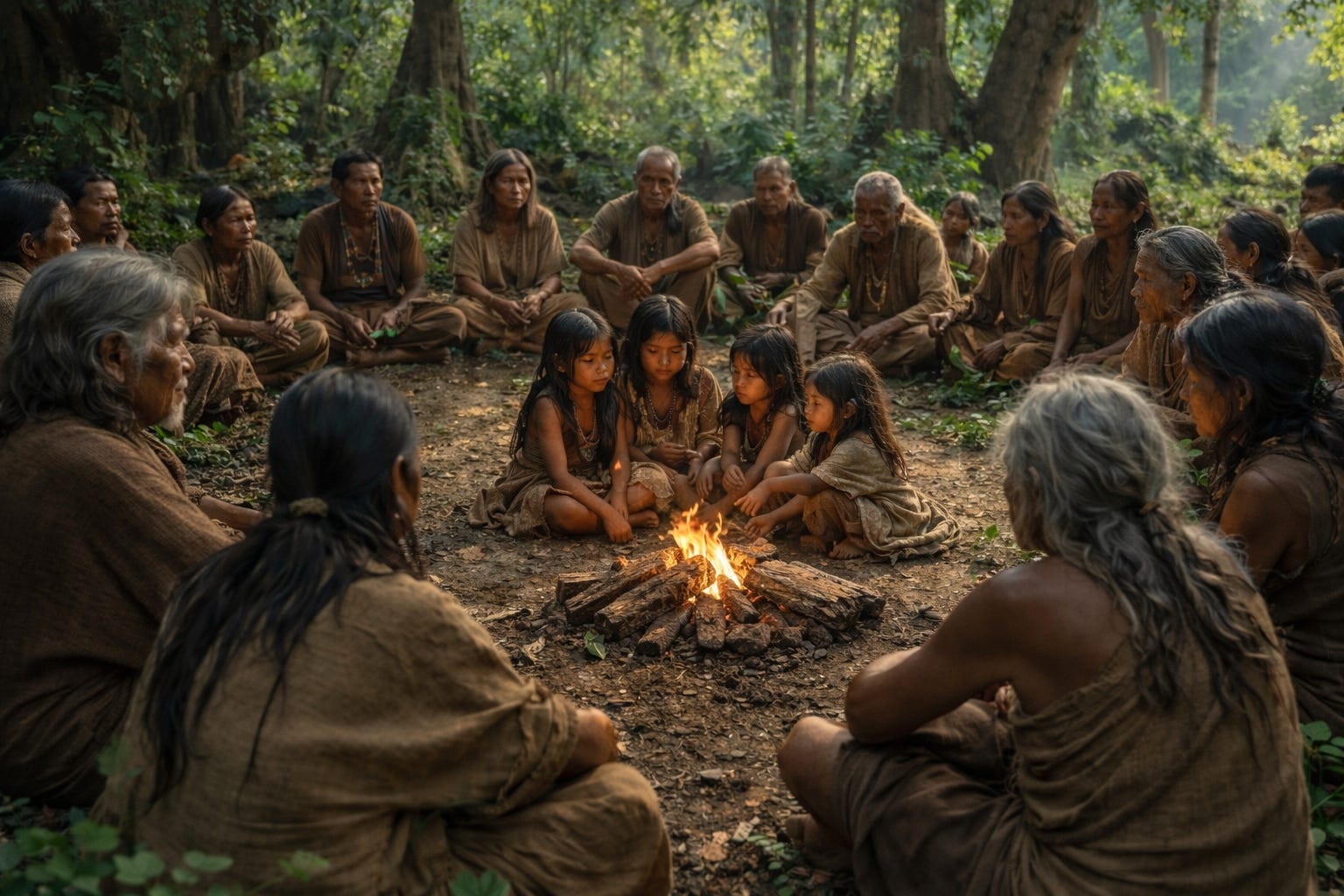
For most of human history, everyone lived inside the same social field. You ate together. Worked together. Raised children together. Reputation mattered because survival depended on it.
When someone crossed a line — especially in ways that threatened women or children — the response was collective and immediate. Status was stripped. Access was revoked. People were shamed, removed, exiled. In extreme cases, killed. Not out of cruelty, but necessity.
Predators didn’t scale because they couldn’t hide.
What we’ve built instead is a system where people with power and status can evade accountability entirely — where harm is absorbed by institutions, legal complexity, and silence.
The problem isn’t that humans changed.
It’s that power designed our systems to insulate itself from consequence.
That’s why Epstein and Weinstein matter — not because they’re shocking, but because they expose a system that no longer performs its most basic job.
Epstein wasn’t allowed to continue because no one knew.
Weinstein wasn’t protected because women stayed silent.
They were allowed to continue because the institutions responsible for restraint failed — deliberately — at the highest levels.
This isn’t just about individual evil.
It’s about structural failure.
A society exists to protect life. That means protecting children, dependents, caregivers — and ensuring continuity across generations. When those protections fail at the top, the society is no longer functioning, no matter how advanced it looks on paper.
A society that cannot restrain its most powerful members has already failed.
Everything else is just maintenance of the illusion.